 a295c5f968
The idea here is that there is a single file for the nav for all the docs, both online and offline. The nav will be the full online nav in all its blog glory, and then the build system will strip out the nav items relating to the blog when building the offline version. There's a wrinkle or two still in here; the main one being that when doing a docs-serve, it seems that the cleaning up of the online nav doesn't happen when you Ctrl-C out of the server. I'm not 100% sure of the cause of this (there could be a couple of different reasons). For now... I'm ensuring that the online/offline nav files are excluded from git. It would be nice to find out how best to always ensure that the online nav file is removed so nobody attempting to update the docs gets confused about what to edit. |
||
|---|---|---|
| .faq | ||
| .github | ||
| docs | ||
| examples | ||
| imgs | ||
| notes | ||
| questions | ||
| reference | ||
| src/textual | ||
| tests | ||
| tools | ||
| .coveragerc | ||
| .gitignore | ||
| .pre-commit-config.yaml | ||
| CHANGELOG.md | ||
| CODE_OF_CONDUCT.md | ||
| docs.md | ||
| FAQ.md | ||
| faq.yml | ||
| hatch.toml | ||
| LICENSE | ||
| Makefile | ||
| mkdocs-common.yml | ||
| mkdocs-nav.yml | ||
| mkdocs-offline.yml | ||
| mkdocs-online.yml | ||
| mypy.ini | ||
| poetry.lock | ||
| pyproject.toml | ||
| README.md | ||
Textual
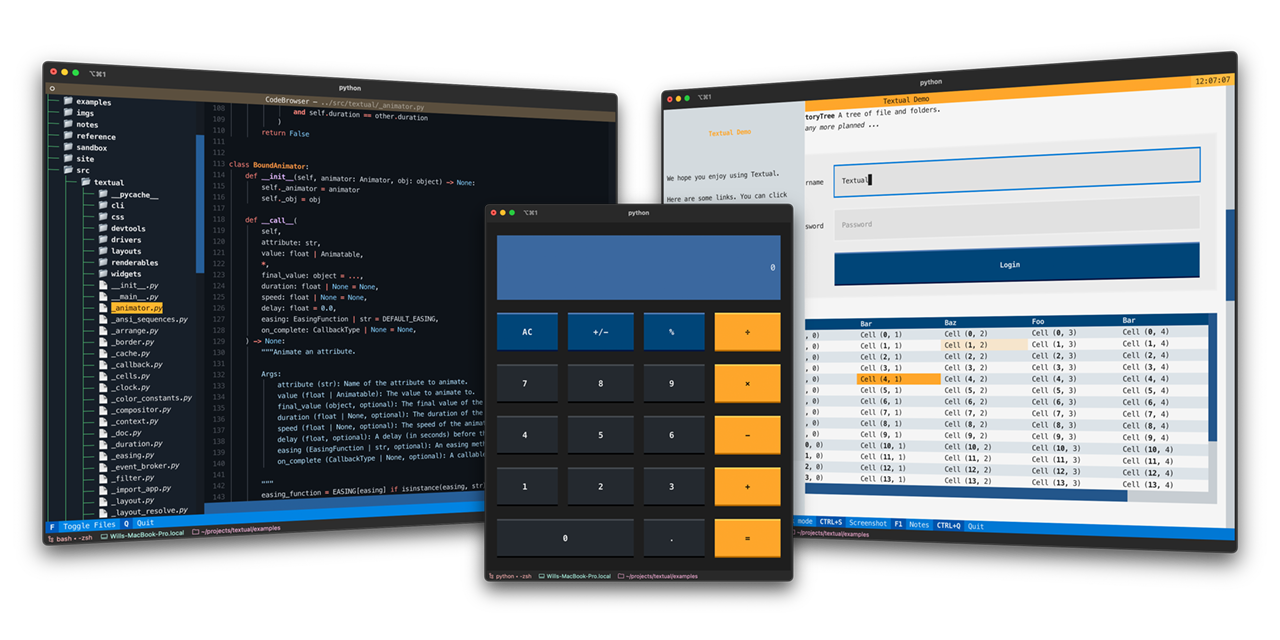
Textual is a Python framework for creating interactive applications that run in your terminal.
🎬 Demonstration
A quick run through of some Textual features.
https://user-images.githubusercontent.com/554369/197355913-65d3c125-493d-4c05-a590-5311f16c40ff.mov
About
Textual adds interactivity to Rich with a Python API inspired by modern web development.
On modern terminal software (installed by default on most systems), Textual apps can use 16.7 million colors with mouse support and smooth flicker-free animation. A powerful layout engine and re-usable components makes it possible to build apps that rival the desktop and web experience.
Compatibility
Textual runs on Linux, macOS, and Windows. Textual requires Python 3.7 or above.
Installing
Install Textual via pip:
pip install "textual[dev]"
The addition of [dev] installs Textual development tools. See the docs if you need help getting started.
Demo
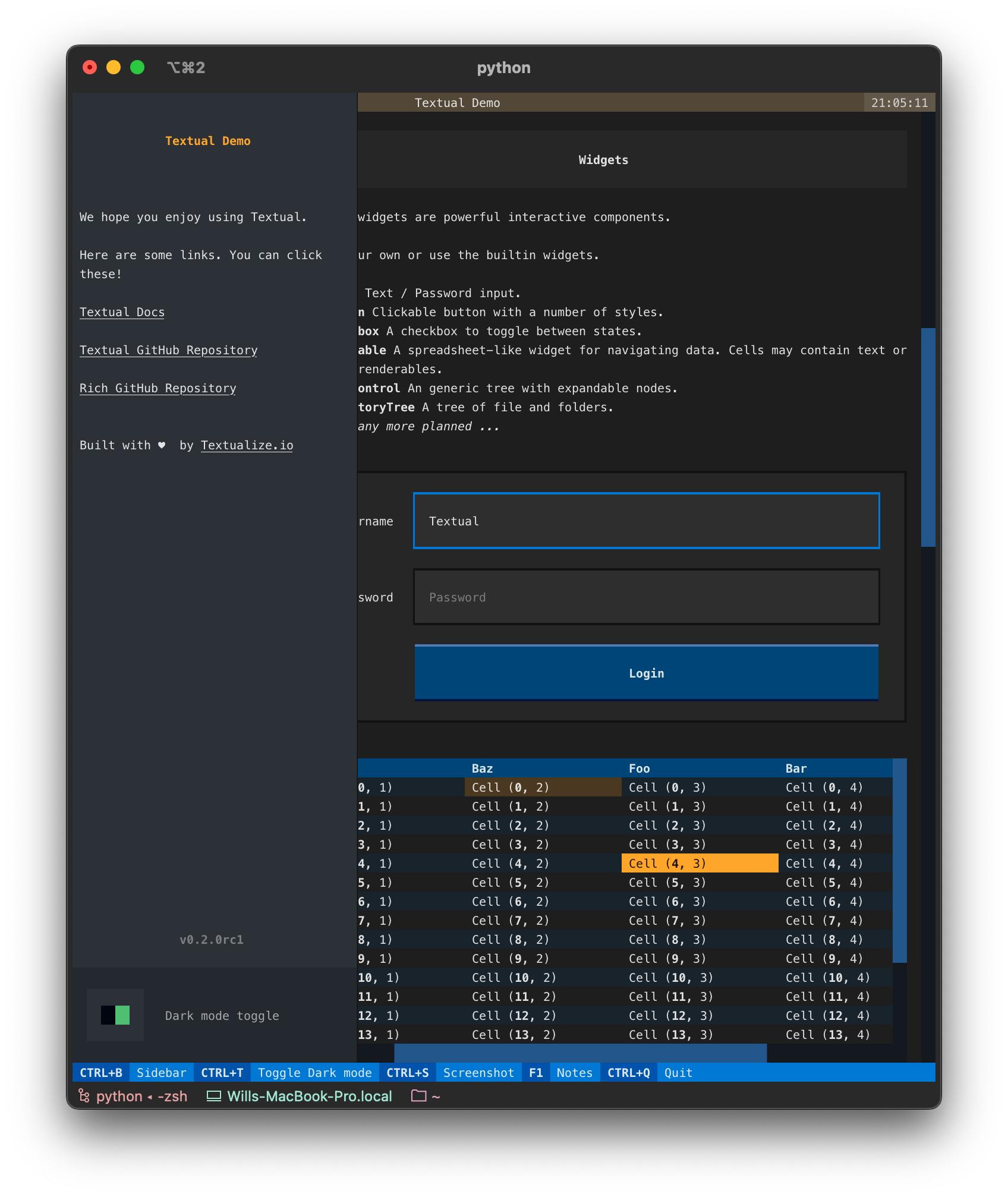
Run the following command to see a little of what Textual can do:
python -m textual
Documentation
Head over to the Textual documentation to start building!
Examples
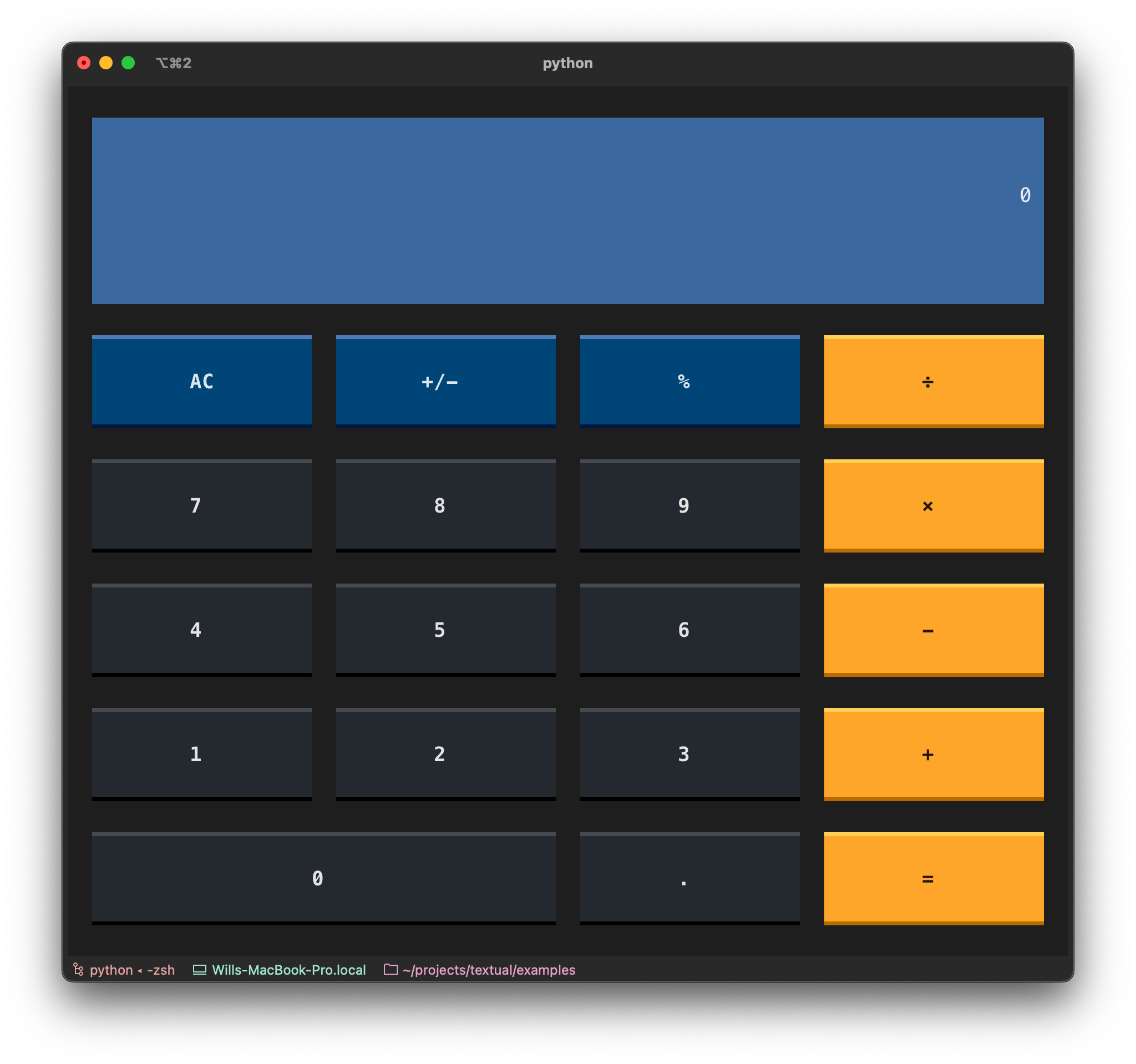
The Textual repository comes with a number of examples you can experiment with or use as a template for your own projects.
🎬 Code browser
This is the code_browser.py example which clocks in at 61 lines (including docstrings and blank lines).
https://user-images.githubusercontent.com/554369/197188237-88d3f7e4-4e5f-40b5-b996-c47b19ee2f49.mov
🎬 Stopwatch
This is the Stopwatch example from the tutorial.
https://user-images.githubusercontent.com/554369/197360718-0c834ef5-6285-4d37-85cf-23eed4aa56c5.mov
Reference commands
The textual command has a few sub-commands to preview Textual styles.
🎬 Easing reference
This is the easing reference which demonstrates the easing parameter on animation, with both movement and opacity. You can run it with the following command:
textual easing
https://user-images.githubusercontent.com/554369/196157100-352852a6-2b09-4dc8-a888-55b53570aff9.mov
🎬 Borders reference
This is the borders reference which demonstrates some of the borders styles in Textual. You can run it with the following command:
textual borders
https://user-images.githubusercontent.com/554369/196158235-4b45fb78-053d-4fd5-b285-e09b4f1c67a8.mov
🎬 Colors reference
This is a reference for Textual's color design system.
textual colors
https://user-images.githubusercontent.com/554369/197357417-2d407aac-8969-44d3-8250-eea45df79d57.mov